Interactive Visual Keynotes: Breaking the Fourth Wall
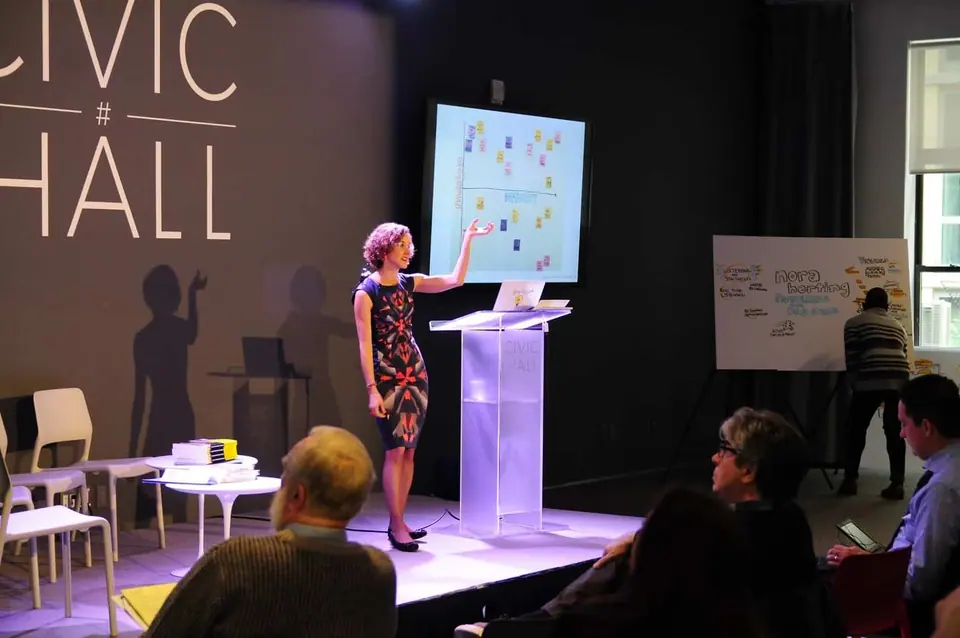
Until 2020, ImageThink Founder and CEO, Nora Herting enjoyed speaking on stage, delivering interactive visual keynotes, in front of a big crowd, something she was regularly engaged to do as a leader in the field of visual leadership and graphic facilitation.
But when COVID-19 hit, Nora joined event organizers, graphic facilitators, and convention-goers, keynote speakers, in taking on the challenge of adapting to deliver and engage attendees in the virtual world.
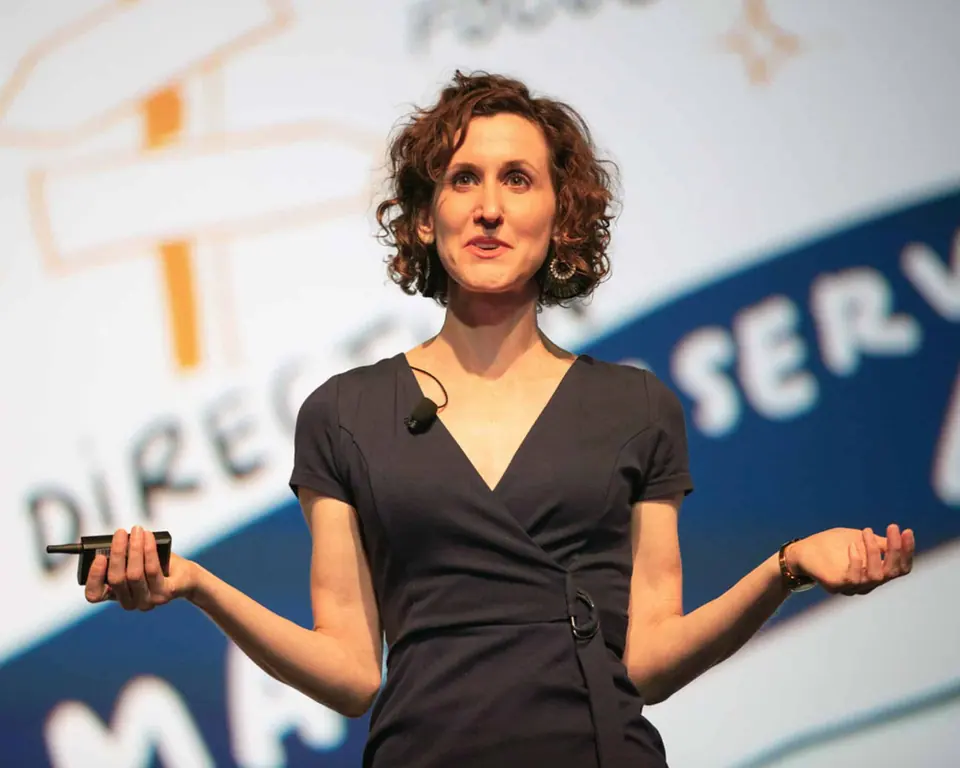
“Drawing is interactive, and immediately engaging.“
Walking the walk, she took a creative, visual approach to solving this problem. Since then, feedback on Nora’s interactive visual keynotes is even better than her in the room version. Why?
We asked Nora herself, below.
Nora: Speaking online radically changes the experience for both speaker and audience. there is no immediate feedback, you can’t read the room, make eye contact, or use a lot of space to stay connected. You’re mostly looking into the iris of a tiny webcam.
Nora: It was important to me to Keep the audience engaged in a virtual world by anchoring something in the physical space… My solution was to maintain a visceral experience for the audience.
Nora: Fortunately, I can practice what we preach at ImageThink, because drawing is interactive, and immediately engaging.
“Asking an audience to participate in a shared experience, especially one that is physical and mental like drawing, can forge a connection, even virtually.”
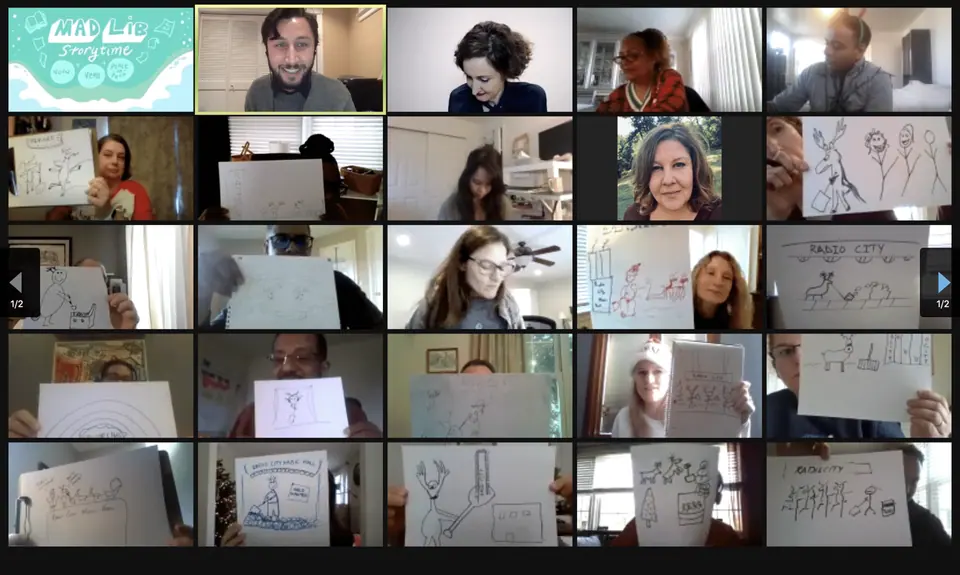
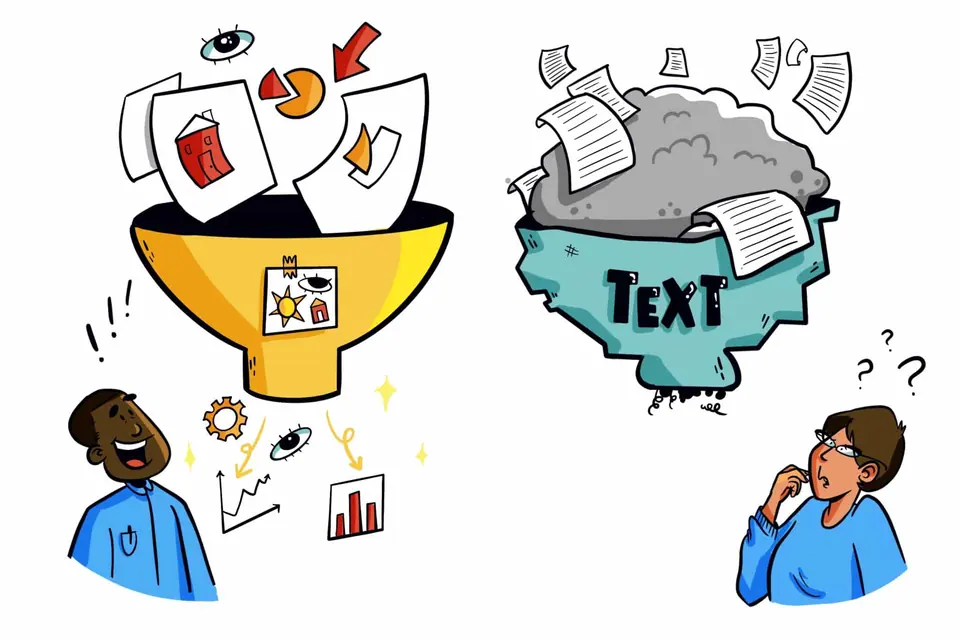
Nora: That’s right. These interactive visual keynotes are designed to help people connect with each other in a virtual platform, tap into principles of neuroscience to get people thinking differently and remembering more, and lastly, to effectively demonstrate the core message of my talks which is visuals are powerfully simple and effective tool in business.
Nora: When I describe an interactive visual keynote, I’m specifically talking about using my own visual frameworks, prompts, and games to get the audience participating and drawing together (even if they’re apart).
Asking an audience to participate in a shared experience, especially one that is physical and mental like drawing, can forge a connection, even virtually. People bond when they embark together into unknown territory.
“By using different skills – listening, synthesizing, organizing, visualizing, and then drawing – attendees are considering information from multiple perspectives and instinctively engaging in whole-brain thinking, without even knowing it.“
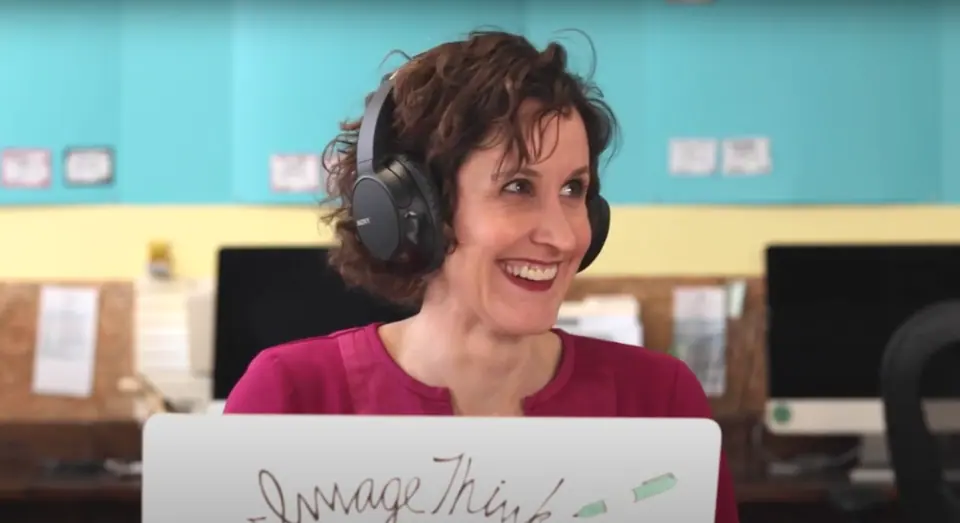
Nora: That is why it works so well! With a little encouragement, there’s a sense of bonding that happens when everyone is trying something new together, even if that space is a virtual space. Since working remotely, audience intermingling is even more important.
In an online meeting with everyone’s camera on, we like to invite participants to share their work. Sharing work further reinforces the content and ideas being explored by allowing everyone to see it through one another’s eyes. The playing field is leveled, and everyone can share in the experience of being non-artists making some art. Besides, it is usually good for a few laughs, something we all need more of right now.
Nora: Drawing requires additional engagement while pushing people to try something novel, which gets new neurons firing. In other words, it engages the whole brain; participants are listening, seeing, thinking, and moving to create something new, a visual summary of what they are learning. Those actions all contribute to cementing content in the brain.
By using different skills – listening, synthesizing, organizing, visualizing, and then drawing – attendees are considering information from multiple perspectives and instinctively engaging in whole-brain thinking, without even knowing it.
There’s also a benefit when you’re not the one drawing! Some of you might have heard my interview with neuroscientist, and sister Dr. Megan Herting. She spoke about mirror neurons- when we watch someone else doing something, our neurons fire as if we are performing the action. So, in this case, if the audience watches someone from ImageThink draw, their brains begin to fire like an artist.
“That moment of empowerment when people see how they can use this tool for themselves never gets old to me.”
Nora: The audience made drawings are a real, tangible, one-of-a-kind artifact. One that can be revisited, reviewed, even revised over time. Details and important concepts don’t fade or get murky when they’re in marker.
In the end every attendee has a unique visual representation of what they learned, and that’s what makes it stick. People are much more likely to revisit something they had fun making, something that they take some pride in, and something that they put some thought and effort into, than an automatically forwarded email of someone else’s bullet points. The very act of creating the notes makes them more valuable and more likely to be used.
Now that we are attending virtual events, there is this strange flattening. I can attend a sales seminar, meditation session, and networking happy hour all in my kitchen (yep, I’m working out of my kitchen, too). But when someone is an audience in my keynote, there remains a physical artifact sitting on their desk. A token to remind them of the content, and the experience.
Nora: Because the tool is so powerful, especially right now.
So many people have barriers to picturing themselves as creative thinkers, or as people capable of drawing. I have lead thousands of people in audiences through simple exercises, and I’ve seen people surprise themselves with the outcome. That moment of empowerment when people see how they can use this tool for themselves never gets old to me.